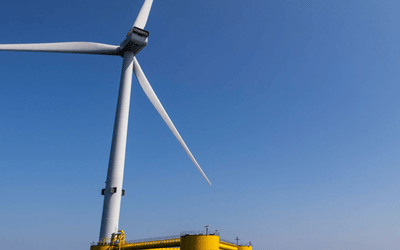



Across the entire engineering landscape, from clean energy to aerospace and defence, infrastructure to advanced manufacturing, the UK is investing heavily in the technologies and capabilities that will underpin and drive sector growth for the next decade and beyond.
For engineers, whether an apprentice or a senior specialist at the top of their industry, this is generating unprecedented career mobility and a wide spectrum of high‑value opportunities.
Below, we explore where the most exciting career paths for engineers lie, why the industry remains a choice for long‑term development, and how you can position yourself to take advantage.
Why choose a career in Engineering?
Engineering careers in 2026 are increasingly future‑proof, purpose‑driven, and diverse, thanks to the important role they have in infrastructure, manufacturing, and many other integral sectors.
Around one in five people in the UK are employed across engineering, reflecting its central role in everything from energy security and infrastructure resilience to digital innovation and sustainability.
What’s more, the growth of engineering sectors looks set to continue and build over the long term too. Here are just a few reasons why:
-
Impact: From offshore wind expansions to major transport infrastructure developments and nuclear new‑builds, engineers are delivering projects that shape communities for generations.
-
Net‑zero demand: Green jobs have grown significantly, with renewable energy, energy‑efficiency and circular‑economy workforces expanding rapidly.
-
Progression and earnings: Professional registration, digital upskilling and cross‑disciplinary knowledge deliver measurable pay and promotion benefits.
-
Shortage‑driven mobility: Employers consistently report difficulty hiring, which empowers candidates to explore new sectors, accelerate progression, or negotiate improved packages in existing employment.
The 2026 Engineering career outlook
Despite wider economic uncertainty, engineering employment remains resilient. Permanent vacancy growth across 2025–26 signals strong demand for technical and project talent, while the Government’s long‑term infrastructure and clean‑energy strategies provide valuable multi‑year visibility.
Key trends shaping the market include:
-
A booming clean‑energy workforce: Employment in UK renewables and green energy is forecast to double by 2030, with offshore wind alone supporting tens of thousands of new jobs.
-
Infrastructure investment clarity: The national infrastructure pipeline offers improved transparency around future transport, energy, water and digital projects, giving engineers a clearer view of where work will concentrate and where they could potentially thrive
-
A growing defence and security sector: With increased R&D, naval, aerospace and cyber spending, a career in defence engineering remains a highly stable and well‑funded route.
-
Skills shortages across the board: A retiring workforce, limited apprenticeship completions and rising digital/sustainability requirements mean engineers with adaptable skillsets are in exceptionally strong position.
The most exciting Engineering career paths in 2026
Clean Energy & Grid Engineering
A cornerstone of the UK’s net‑zero transition, this is one of the fastest‑growing fields. Offshore wind, onshore wind, solar, battery storage and HVDC interconnector projects all require electrical, mechanical, controls, civil and HSE specialists.
High‑demand roles:HV engineers, grid integration specialists, SCADA/automation professionals, subsea cable engineers, project managers.
Ideal for: Candidates seeking long‑term stability, technical depth and a sustainability‑focused career path.
Suggested Read: The Green Industrial Revolution
Nuclear New‑Build & Decommissioning
With major nuclear programmes progressing, nuclear engineering remains one of the best long‑term technical careers.
High‑demand roles:Systems engineers, commissioning specialists, safety‑case engineers, QA/QC, civil and mechanical package managers.
Ideal for: Those with an eye for detail, rigorous safety thinking and comfort working in regulated environments.
Rail & Transport Infrastructure
HS2 may be evolving in scope, but initial phases continue to drive large‑scale civil, systems and rail‑engineering demand. Wider upgrades including signalling, electrification, station redevelopment and rolling‑stock modernisation add further opportunity.
High‑demand roles:Rail systems (signalling, OLE), civil structures, RAMS, MEP, project controls, digital rail specialists.
Ideal for: Engineers who enjoy complex programme delivery and multi‑stakeholder environments.
Aerospace & Aviation
With major investment in hydrogen propulsion, zero‑emission aircraft and advanced manufacturing, aerospace engineering is re‑entering a high‑innovation phase.
High‑demand roles: Propulsion, materials science, fuel systems, simulation, composites, test engineering.
Ideal for:Candidates seeking cutting‑edge technology, multidisciplinary work and global career mobility.
Suggested Read: How Carbon60 are helping to shape the future of aviation and its workforce
Defence, Security & Cyber‑Physical Systems
Defence spending growth across R&D, naval, air and digital systems is contributing to a robust hiring market, particularly for engineers with systems, software or electronics expertise.
High‑demand roles: Systems engineering, mission software, avionics, RF/electronics, cyber resilience, test & trials.
Ideal for:Those excited by high‑integrity systems and long‑horizon projects.
How to get into top Engineering roles in 2026
To secure top engineering roles in 2026, start by mapping your skills to future project pipelines. Research multiyear programs in clean energy, rail, nuclear, defence, and advanced manufacturing, and focus on roles that appear consistently across multiple sectors.
Building skills, experience, and gaining certifications that may enhance your market value is essential. Embrace trainings and apprenticeships, bootcamps, and cross-sector training pathways, especially those tailored for clean energy and digital engineering, as these are designed to accelerate early-career engineers into high-value roles.
When updating your CV and preparing for interviews, ensure your information and responses are project-led by highlighting tangible outcomes, improvements, or solutions you delivered, and quantifying your impact wherever possible.
Suggested Read: How to succeed at an engineering job interview
Finally, maintain flexibility and readiness for new opportunities where possible. Geographic mobility, openness to both hybrid contract and permanent positions, and, where relevant, eligibility for security clearance can all significantly expand your career options, especially as projects scale and expand.
Ready to Build Your Next Engineering Move?
At Carbon60, we specialise in connecting talented professionals with leading employers across a variety of sectors, including aerospace, construction, manufacturing, energy, and renewables.
Explore our latest engineering jobs and discover opportunities across energy, renewables and infrastructure, construction, and manufacturing engineering.